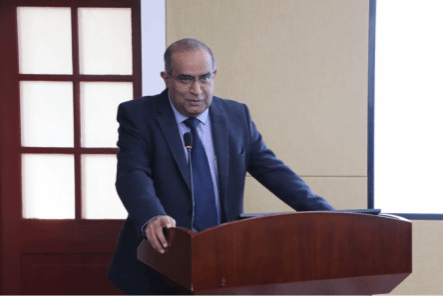
(The keynote speaker,Professor Gomez in the lecture)
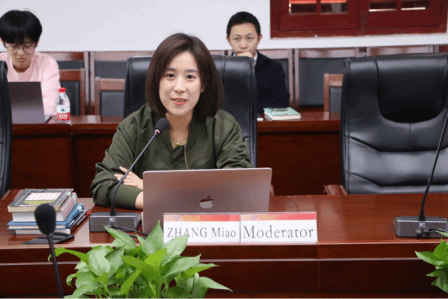
(The moderator, Professor Zhang Miao in the lecture)
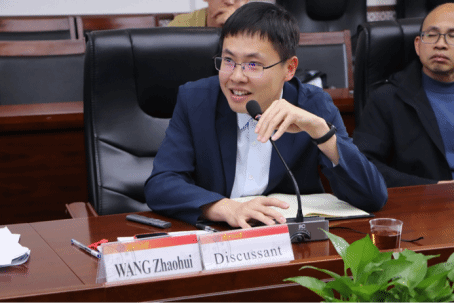
(The discussant,Professors Wang Zhaohui in the lecture)
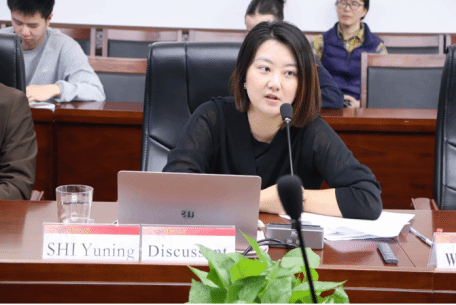
(The discussant,Professors Shi Yuning in the lecture)
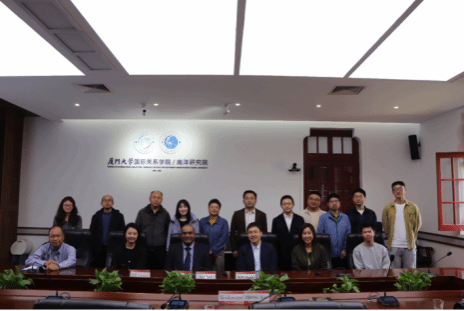
(Group photo of the lecture“Malaysia’s Political–Business Complex: Government-Linked Companies and Governance Breakdown”)
On the morning of March 25, 2025, the 69th Session of the Lecture Series on Southeast Asian Affairs and Global Perspective was held in Conference Room 301-3, Nanan Building, Xiamen University. The lecture invited Professor Edmund Terence Gomez as the keynote speaker. The topic was “Malaysia’s Political–Business Complex: Government-Linked Companies and Governance Breakdown.”
Professor Gomez is Honorary Professor of Political Economy at the Faculty of Economics and Administration, Universiti Malaya. He served as Dean of the Faculty of Economics and Administration from 2018 to 2021. His academic research focuses on the relationship between the state and the market, as well as the interactive mechanisms between political policy and corporate development.
As an internationally renowned political economist, Professor Gomez has taught for extended periods at the University of Leeds in the United Kingdom and Murdoch University in Australia, and has served as a Visiting Professor at Kobe University in Japan, the University of Michigan, Ann Arbor, and the University of California, San Diego. His academic contributions are reflected in several English monographs, including The Political Economy of Malaysia: Politics, Patronage and Profits and Government-Linked Companies and Sustainable, Equitable Development, which systematically reveal deep-seated contradictions in political–business networks, ethnic policies, and corruption governance.
The moderator, Professor Zhang Miao, warmly welcomed Professor Gomez and introduced his academic background, main research areas, and major scholarly achievements to the faculty members and students in attendance.
During the lecture, Professor Gomez first analyzed the formation of the political–business complex and the associated corruption mechanisms, then elaborated on the diverse forms of corruption and institutional loopholes, and finally proposed targeted policy recommendations.
Professor Gomez pointed out that Malaysia’s political–business complex is rooted in the evolution of state intervention in the economy. Since the implementation of the New Economic Policy (NEP) in 1970, the government has promoted “Bumiputera priority” economic redistribution through public enterprises and government-linked companies (GLCs), with the original intention of alleviating poverty and reducing ethnic disparities. However, the policy gradually degenerated into a tool for power elites to seek private interests. Following privatization reforms in the 1980s, state resources shifted from public institutions to private enterprises, giving rise to a group of Malay tycoons closely connected to the ruling party, such as UMNO.
He then gave a detailed account of the complex forms of corruption in Malaysia, which include not only traditional bribery and cronyism, but also institutionalized “legal corruption.” Meanwhile, significant loopholes exist in the current legal framework: the Competition Act exempts government actions and tolerates monopolies; the Official Secrets Act undermines transparency; the lack of regulation over political donations turns elections into a “capital game.” The judiciary is constrained by executive power, resulting in selective accountability.
Finally, Professor Gomez emphasized a multidimensional reform path to break the corrupt cycle of the political–business complex. These measures include legislating the regulation of political donations, separating prosecutorial functions, enacting a GLC Act to limit political intervention, and reconstructing the governance system through decentralization, checks and balances, and independent regulation to curb the concentration of power and institutionalized corruption. However, reform faces significant resistance: vested interest groups may obstruct legislation, bureaucratic inertia weakens policy implementation, and public trust in anti-corruption efforts requires long-term restoration. Only through sustained social pressure and institutional innovation can a healthy decoupling of public power and the market be achieved.
Professors Wang Zhaohui and Shi Yuning, serving as discussants, initiated the discussion around key themes such as corruption and governance breakdown, and engaged in in-depth analysis focusing on conceptual definitions, typologies, and further theoretical development.
Professor Zhang Miao summarized Professor Gomez’s presentation and the insightful discussions by the two discussants. During the interactive session, faculty members and students raised questions in turn, which Professor Gomez answered one by one. Finally, Professor Zhang expressed gratitude to Professor Gomez on behalf of the school, and the lecture concluded successfully amid warm applause.
