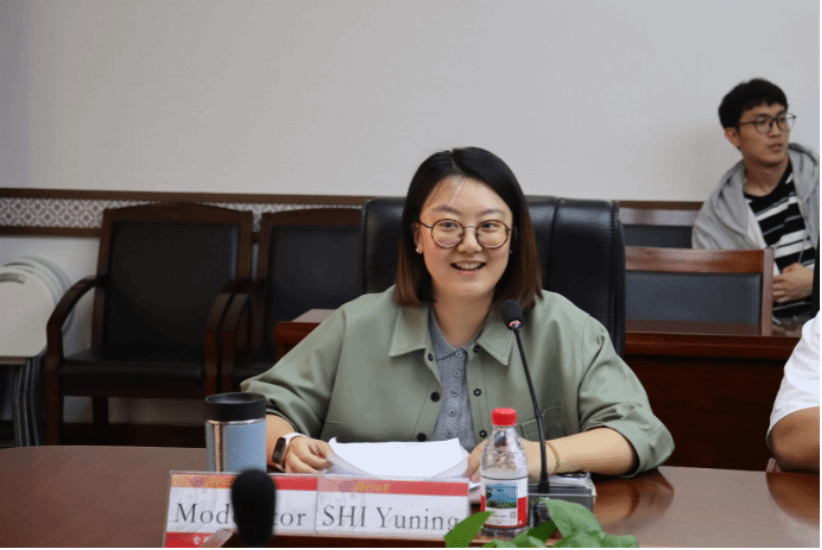
(Dr.Shi Yuning hosted this academic lecture)

(Professor Leonard Andaya gave a lecture)
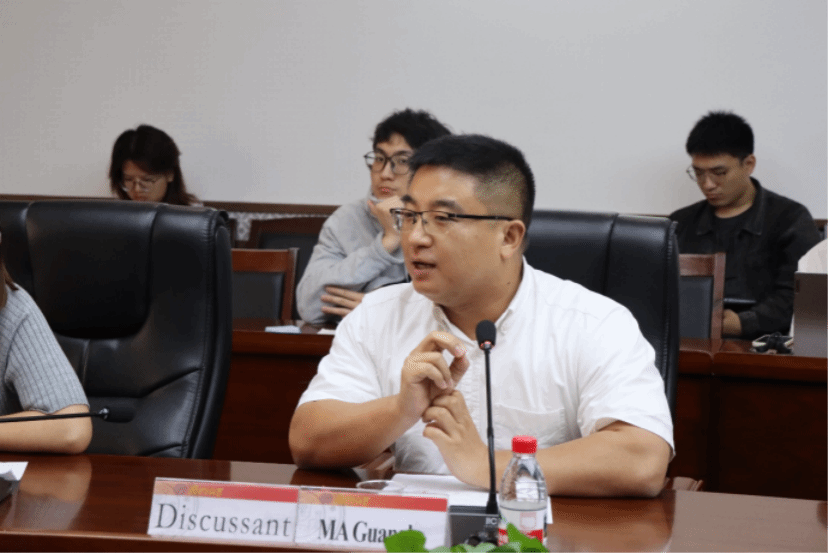
(The discussant Dr. Ma Guanglu made a speech)
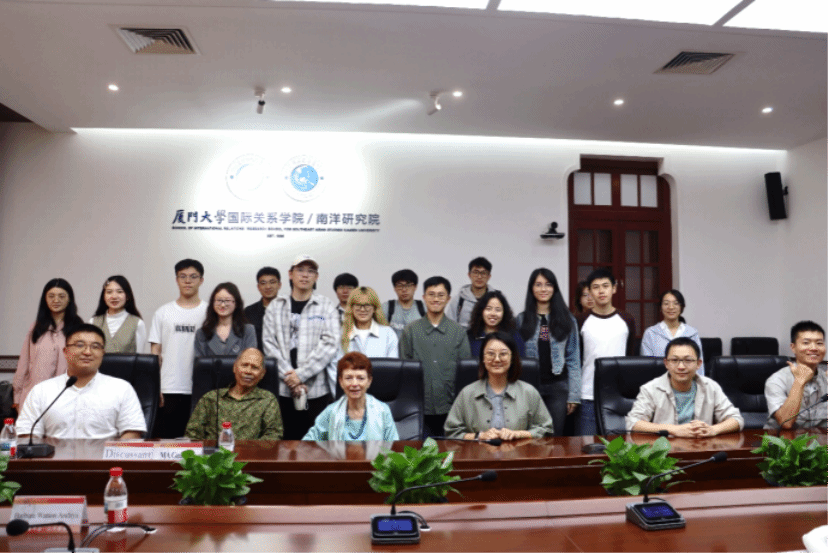
(Group photo of the attendees)
On the afternoon of April 25, 2025, the 73rd lecture of the Southeast Asian Studies and Global Perspectives Series was held in Meeting Room 301-3, Nan’an Building, Xiamen University. Invited as the keynote speaker for this lecture was Professor Emeritus Leonard Andaya of Southeast Asian History from the University of Hawaii at Manoa, USA, whose presentation was themed “Trade Networks and Cross-regime Polities in the Eastern Indonesian Waters”. Professor Leonard Andaya specializes in the early modern history of Southeast Asia, with a particular focus on Indonesian and Malaysian studies.
The academic lecture was hosted by Dr. Shi Yuning, Assistant Professor at the School of International Relations/Research School of Southeast Asian Studies at Xiamen University, with Dr. Ma Guanglu, Tenure-track Assistant Research Fellow at the same school, as the discussant. Dr. Shi Yuning introduced Professor Leonard Andaya’s academic background, major research interests and research achievements to the attending teachers, students and guests.
Starting with the abundant natural resources in eastern Indonesia, Professor Leonard Andaya pointed out that commodities such as cloves and sandalwood have long been exported to markets in China, India, the Middle East and Europe through complex cross-sea trade networks, forging extensive and enduring international connections. He emphasized that the island societies in this region, relying on their profound understanding of monsoons, ocean currents and environmental changes, developed a social system based on resource exchange and trade mutual assistance, rather than maintaining order through centralized political power. From a sea perspective, Professor Andaya noted that in these archipelagic societies, the ocean was regarded as an important space for connection rather than separation, and local communities formed stable yet flexible cross-regime polities through reciprocal trade, resource sharing and cross-island alliances. These trade networks not only underpinned livelihoods and cultural continuity, but also promoted the integration of different ethnic groups and cultures within the region.
During the lecture, Professor Andaya also specifically explored the important role of Chinese merchants in regional trade. Driven by capital, technology and market demand, Chinese merchants facilitated the export of local resources to the international market while transforming local production and exchange patterns. He pointed out that such cross-cultural cooperation was the key to the long-term integration of eastern Indonesian societies into the global trade system. In addition, he drew attention to the impact of climate change on the ecological environment and traditional livelihoods in eastern Indonesia, calling for the integration of environmental history and ecological change perspectives in regional historical research to achieve a more comprehensive understanding of the adaptation and transformation of local societies.
Dr. Ma Guanglu, the discussant, pointed out that the cross-regional trade networks proposed by Professor Andaya were of crucial significance, as they not only influenced the rise and fall of various kingdoms, large and small, in the ancient Indonesian archipelago, but also shaped the social structure and cultural concepts of present-day eastern Indonesia. The state model familiar to the Chinese people is that of a dynastic centralized state and a modern nation-state, which is drastically different from the non-centralized polities represented by eastern Indonesia. Only by adopting a historical perspective can scholars truly uncover what the concepts of state and government mean to local people, thereby understanding the diversity and complexity of Southeast Asia.
In the subsequent Q&A session, teachers and students engaged in in-depth discussions on issues such as how local societies can sustain their livelihoods amid global climate change, and the historical experience of regional cooperation and its practical implications. The attendees generally agreed that this lecture not only enriched the understanding of the historical and social structure of Southeast Asia, but also provided a new theoretical framework and research path for future Southeast Asian regional studies.
The lecture concluded successfully in a lively atmosphere of discussion. The attending teachers and students spoke highly of the wonderful sharing by the keynote speaker and the discussant, and expressed their anticipation for more academic exchange activities on similar themes in the future.
