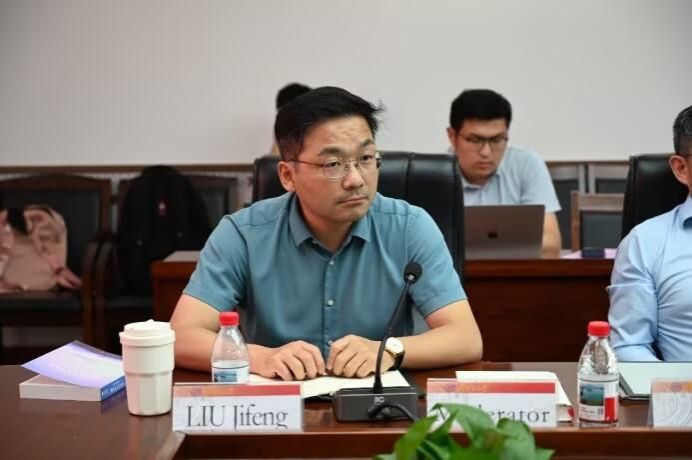
(Professor Liu Jifeng is currently chairing this academic lecture.)
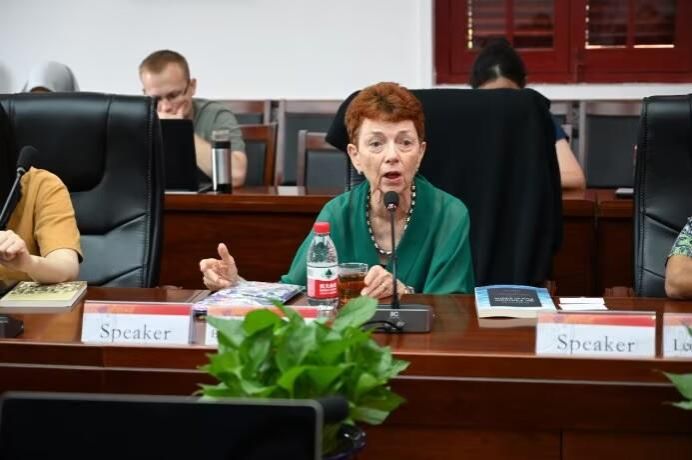
(Professor Barbara is delivering a speech.)
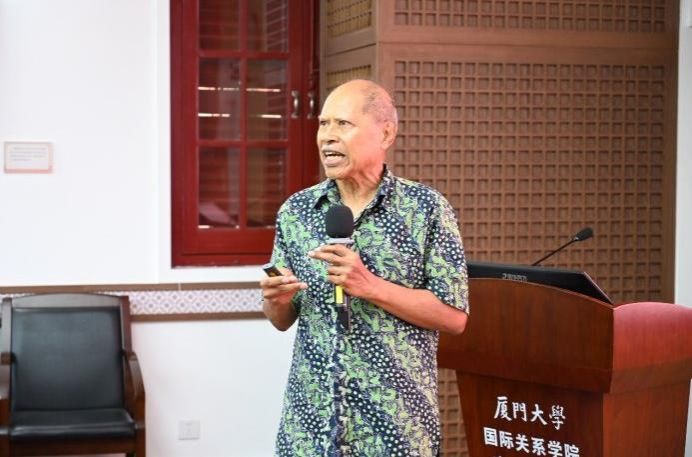
(Professor Leonard is speaking.)
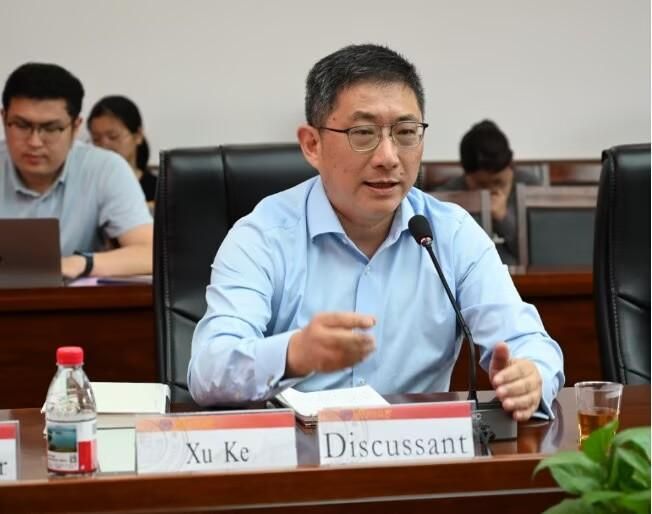
(Professor Xu Ke is providing commentary.)
On the afternoon of April 21, 2025, the 72nd lecture in the “Southeast Asian Issues and Global Perspectives” series was held in Room 301-3, Nan’an Building, Xiamen University. The event featured distinguished speakers Professor Barbara Andaya and Professor Leonard Andaya, both Emeritus Professors of Southeast Asian History at the University of Hawai‘i at Mānoa. The lecture’s theme was “Reconstructing General History and New Academic Approaches through the Lens of Area and Country Studies: A Case Study of A History of Malaysia (4th Edition).”
Associate Professor Liu Jifeng from the School of International Relations / Institute of Southeast Asian Studies at Xiamen University moderated the lecture, and Associate Professor Xu Ke served as the discussant. At the outset, Professor Liu extended a warm welcome to Professors Barbara and Leonard Andaya and introduced their academic backgrounds, primary research interests, and major scholarly achievements to the faculty, students, and guests in attendance.
In the first part of the lecture, Professor Barbara outlined the scholarly process behind their writing of A History of Malaysia (4th edition). She then explained that advances in technology and evolving social attitudes in Malaysia prompted them to expand the scope of the fourth edition to encompass all Malaysians. Furthermore, Professor Barbara discussed the challenges they encountered while composing this new edition. Finally, she emphasized that, in the current context, the central issue in Malaysian historical studies is the question of identity—one that resonates across all ethnic groups.
In the second part of the lecture, Professor Leonard explained that in the fourth edition of A History of Malaysia, the concept of “fluidity and change” was employed to unify and interconnect the identities of all ethnic groups in Malaysia—encompassing aspects such as identity, environment, religious influences, and gender relations. Using the Malay community as a case study, he illustrated this concept and delineated for the audience the distinctive characteristics of “fluidity” and “change” within Malay culture. Furthermore, drawing on the contributions of the Malay diaspora to the dissemination of Malay cultural traditions, Professor Leonard deepened the book’s underlying vision of “Malaysia for all Malaysians” and outlined potential directions and prospects for future research in Malaysian history.
During the Q&A session, discussant Professor Xu Ke offered an insightful commentary on Professors Barbara and Leonard Andaya’s presentations and posed thoughtful questions regarding the impact of piracy on Malay culture, the nuanced understanding of identity, and strategies for responding to the pressures of Westernization. The two professors provided thorough and illuminating responses, creating a vibrant academic atmosphere in the room.
Finally, Professor Liu Jifeng expressed the School’s gratitude to Professors Barbara and Leonard Andaya on behalf of the institution, and the lecture concluded to warm and enthusiastic applause.
